

Veracyte has secured Medicare coverage for its TrueMRD Monitoring Test in muscle-invasive bladder cancer (MIBC), the South San Francisco-based diagnostics company announced May 15.
The Centers for Medicare & Medicaid Services’ (CMS) Molecular Diagnostics Services Program (MolDX) will cover the test for recurrence monitoring following definitive treatment with curative intent in MIBC patients. The test will be available for clinicians to order on June 1, 2026.
The coverage marks the first CMS decision for Veracyte’s whole-genome sequencing-based TrueMRD platform and the commercial launch of the company’s first minimal residual disease offering.
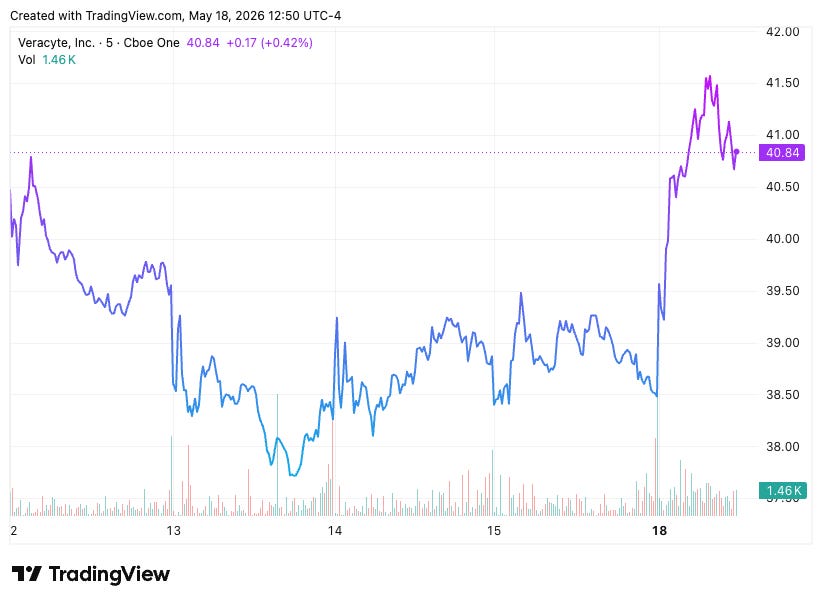
In morning trading on May 18, shares of Veracyte were up 6 percent at $40.80.
“Surveillance for muscle-invasive bladder cancer relies heavily on imaging right now, which has real limitations in detecting early recurrence. A whole-genome MRD test that can help identify disease recurrence, often months before imaging, gives clinicians a powerful new tool,” Matthew Galsky, Deputy Director of the Mount Sinai Tisch Cancer Center, said in a statement. “The expanding clinical evidence behind Veracyte’s MRD platform is compelling, and Medicare coverage brings this test to patients at a pivotal time when the landscape of treatment for muscle-invasive bladder cancer is rapidly changing with the development of more effective systemic therapies and expanding bladder-sparing approaches.”
Up to half of MIBC patients experience recurrence within two years of initial treatment, and current surveillance relies primarily on imaging, which may not detect recurrence until disease has substantially progressed.
VeraCyte’s TrueMRD platform analyzes patient-specific tumor variants across the entire genome in each sample, allowing longitudinal tracking of tumor clonality and molecular evolution. Monitoring disease status can guide clinicians and patients in choosing treatment options, such as selecting more aggressive therapy if disease signal returns, or avoiding riskier treatments if the signal remains low.
Clinical evidence supporting the platform includes PAGER, a prospective study published in European Urology that evaluated more than 900 blood and tissue samples from 112 MIBC patients treated with neoadjuvant chemotherapy and radical cystectomy. The TrueMRD MIBC Test detected disease recurrence a median of 131 days earlier than imaging in that study.
The test is also being used in two ongoing trials: TOMBOLA, evaluating ctDNA-guided use of adjuvant immunotherapy with checkpoint inhibitors, and NEO-BLAST, which is investigating whether MIBC patients with no remaining cancer after neoadjuvant therapy can safely opt for active surveillance rather than immediate radical cystectomy.
Last week, the FDA approved Natera’s Signatera, also a tumor-informed MRD test, as a companion diagnostic for immunotherapy in MIBC.