Five cancer testing companies reported second-quarter results on July 30, with results ranging from strong beats to a material miss.
Guardant Health
Guardant Health reported Q2 2026 revenue of $335.0 million, up 44 percent year over year from $232.1 million, driven by strong growth in both Oncology and Screening segments. Oncology revenue grew 38 percent to $219.1 million, on volume growth of 63 percent to approximately 104,000 tests. Screening revenue, driven by the Shield colorectal cancer blood test, surged more than 250 percent to $52.9 million from $14.8 million a year ago, as Shield volume grew to approximately 66,000 tests from approximately 16,000 in Q2 2025. Biopharma and data revenue grew 9 percent to $60.9 million.

The company’s net loss for the quarter was $120.1 million, or $.90 per share, compared to a loss of $99.9 million, or $.80 per share, in Q2 2025.
Cannacord Genuity analyst Kyle Mikson noted that Guardant raised its 2026 revenue guidance by more than the Q2 beat relative to consensus, and that Shield volume grew 50 percent sequentially in the quarter.
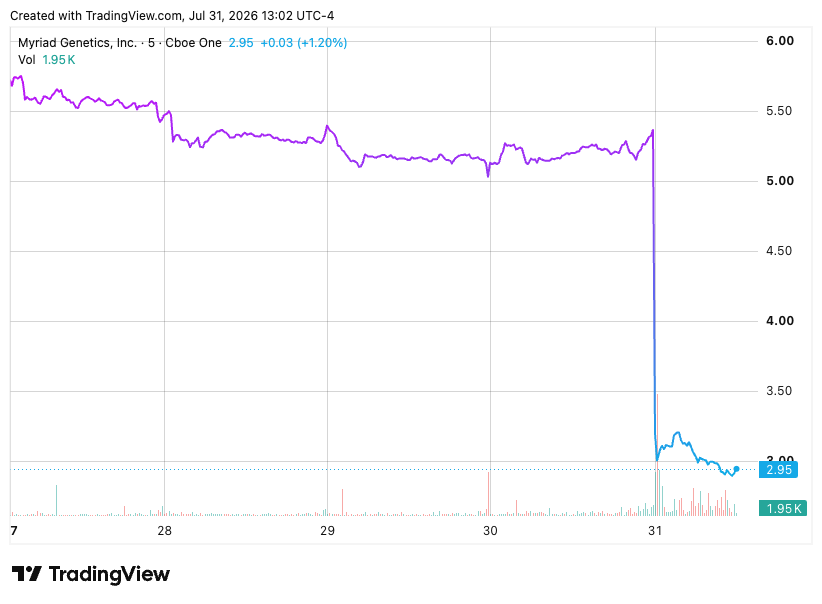
Myriad Genetics
Myriad Genetics reported Q2 2026 revenue of $190.7 million, down 11 percent year over year from $213.1 million and missing the consensus Wall Street estimate of $206.0 million. The company reported an adjusted loss of $.25 per share, below the consensus estimate for a loss of $.03 per share.
The miss was driven by two primary factors: continued volume losses in the Prenatal Health segment, where volumes declined 9 percent year over year, and newly emerging payor friction that eroded MyRisk hereditary cancer panel average selling prices (ASP.)
Cancer Care Continuum test volumes grew 6 percent year over year and Mental Health test volumes grew 4 percent, but both saw declining revenue year over year.
Myriad cut its full-year 2026 revenue guidance to $770 million to $790 million from a prior range of $860 million to $880 million.
Shares of Myriad fell 46 percent to $2.89 in July 31 trading on the Nasdaq.
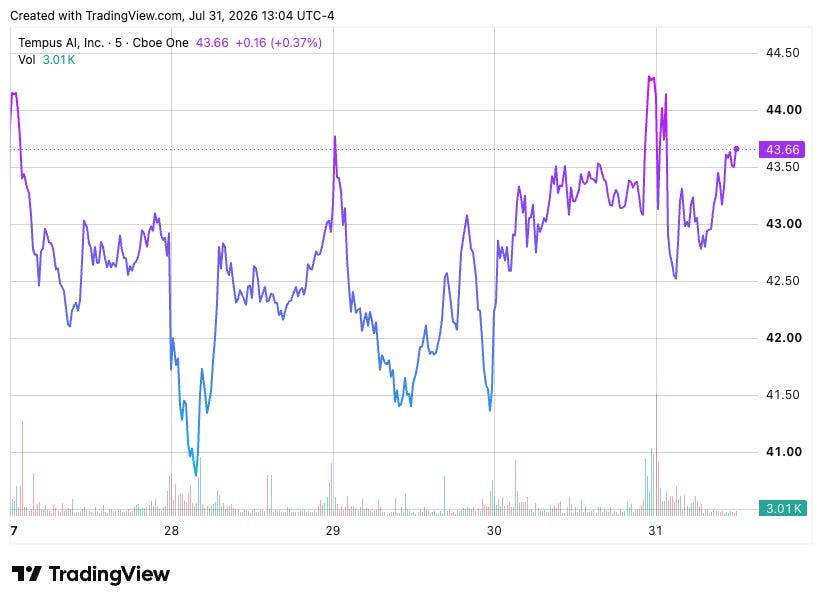
Tempus AI
Tempus AI reported Q2 2026 revenue of $382.5 million, up 22 percent year over year from $314.6 million, ahead of its own guidance and the consensus Wall Street estimate. Diagnostics revenue grew 20 percent to $289.3 million, driven by oncology volume growth of 31 percent, partially offset by hereditary revenue growth of 5 percent. Data and applications revenue grew 28 percent year over year to $93.2 million, with its Insights licensing business growing 36 percent. The company signed approximately $200 million in new data and applications licenses during the quarter, including a multiyear partnership with BioNTech.
Net income for the quarter was $5.6 million, or $.03 per share, compared to a loss of $42.8 million, or $.25 per share, in Q2 2025.
“Our strategy is working given the investments we have made in AI over the past several years are driving some of the best growth rates we have seen in our two largest businesses,” CEO Eric Lefkofsky said in a statement.
Tempus raised its full-year 2026 revenue guidance to $1.60 billion to $1.61 billion, up from a prior range of $1.59 billion to $1.60 billion.
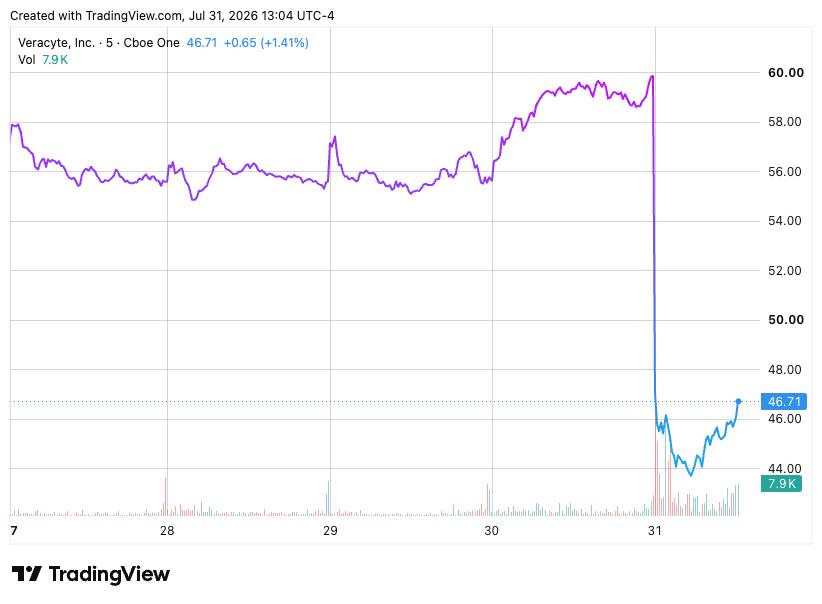
Veracyte
Veracyte reported Q2 2026 revenue of $150.3 million, up 15 percent year over year from $130.2 million, ahead of the consensus Wall Street estimate of $144.6 million. Testing revenue grew 19 percent year over year to $145.7 million, driven by Decipher Prostate revenue growth of 20 percent to $91.9 million, and Afirma growth of 18 percent to $51.2 million. The company also launched two new products in the quarter: the Prosigna breast cancer recurrence test and the TrueMRD monitoring test for muscle-invasive bladder cancer, the latter receiving Medicare coverage.

Net income for the quarter was $25.5 million, or $.31 per share, compared to a net loss of $980,000, or $.01 per share, in Q2 2025.
In a note to investors, Mikson noted that Decipher’s test volume growth of 17 percent year over year, while solid, broke a streak of 16 consecutive quarters above 20 percent.
Veracyte raised its full-year 2026 total revenue guidance to $590 million to $596 million from prior guidance of $582 million to $592 million.
Shares of Veracyte fell 22 percent in July 31 trading on the Nadsaq.
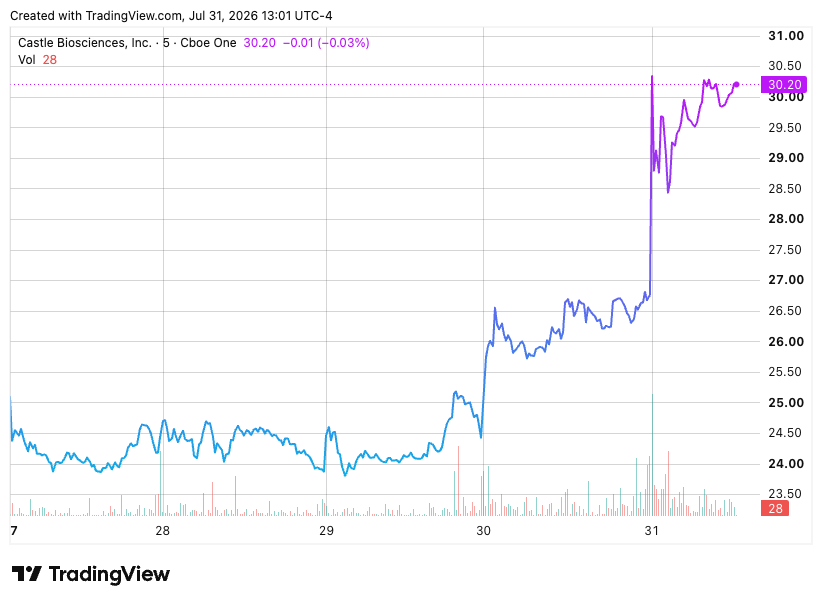
Castle Biosciences
Castle Biosciences reported Q2 2026 revenue of $103.5 million, up 20 percent year over year from $86.2 million, well ahead of the consensus estimate of $88.1 million. Growth was led by TissueCypher, the company’s Barrett’s esophagus test, where volume grew 63 percent year over year to 14,988 tests. DecisionDx-Melanoma volume grew 3 percent year over year to 10,280 tests. DecisionDx-SCC volume declined 16 percent year over year to 4,011 tests, reflecting the loss of Medicare coverage effective April 2025, though management noted that a positive draft LCD decision in the second half of 2026 could restore coverage by mid-2027.
Net loss for the quarter was $2.1 million, or $.07 per share, compared to net income of $4.5 million, or $.15 per share, in Q2 2025.
Castle Biosciences raised its full-year 2026 revenue guidance to $365 million to $375 million from a prior range of $345 million to $355 million.
In July 31 trading on the Nasdaq, shares of Castle Bio were up 12 percent at $30.01.